We look back at some of the key developments that occurred in the world of construction law and practice in the first half of 2018, highlighting important cases, legislation and other industry developments.
First published on LexisPSL Construction. Click here for a free trial.
Key Cases
Grove v S&T
Grove v S&T represented a significant change to the law around payment-related notices under the Housing Grants, Construction and Regeneration Act 1996 (HGCRA 1996). In that case, the Technology and Construction Court (TCC) held that an employer was able to challenge, by way of further adjudication, the amount due to a contractor in respect of an interim application, by reference to the true value of the works—even if the employer had not given a valid payment or pay less notice.
The Supreme Court’s decision in Rock Advertising v MWB concerning no oral modification clauses (sometimes referred to as no oral variation clauses) is worth construction practitioners taking note of. In that case, the court held that payments under a licence agreement containing such a clause could not be varied by oral agreement between representatives of the licensor and the licensee. See News Analysis: Contract law in the Supreme Court—a sensible break with the common law? (Rock Advertising Ltd v MWB Business Exchange Centres Ltd).
No oral modification clauses are often found in construction contracts (see, for example, clause 12.3 of the NEC4 Engineering and Construction Contract). The Supreme Court’s decision resolves some of the uncertainty that had arisen around their effectiveness following the Court of Appeal’s ruling in 2016 in Globe Motors v TRW.
Equitix v Bester Generacion
In Equitix v Bester Generacion, the TCC had to grapple with the exclusions to the HGCRA 1996 set out in s 105. Its decision indicates that, when considering whether a dispute arising under a contract can be referred to adjudication under the HGCRA 1996, it is necessary to look at what the dispute itself relates to, rather than the contract as a whole.
On the facts of the case, although the contract in question was for the construction of a biomass-fired power plant, which is excluded by the power generation exclusion (HGCRA 1996, s 105(2)(c)(ii)), the court held that preparatory arrangements, such as the preparation of the bonds or a business plan, fell outside the exclusion. Accordingly, the adjudicator had jurisdiction to hear a dispute concerning the preparatory works. See News Analysis: Exclusions to the HGCRA 1996—the impact of Equitix v Bester Generacion.
Haberdashers v Lakehouse
Haberdashers v Lakehouse is the first case in which the court had to consider the legal basis under which a sub-contractor becomes party to a project-wide insurance policy. It is generally assumed that sub-contractors can be covered by such policies, even if the sub-contract is entered into after the policy is in place, but the legal basis for this has never been entirely certain. This judgment gives support to the basis that there is a standing offer by the project insurers to insure persons who are subsequently identified as part of a defined group.
In that case, the TCC held that the sub-contractor was not entitled to rely on project insurance due to the fact that the sub-contract required it to take out its own cover. Accordingly, the main contractor (on behalf of the project insurers) could recover from the sub-contractor sums paid out under the project policy. See News Analysis: Sub-contractor not entitled to benefit of project insurance (Haberdashers v Lakehouse).
Redbourn v Fairgate
Redbourn v Fairgate highlights the need to consider, in a wrongful termination claim, whether the defendant might have been able to lawfully terminate the contract in any event at a later stage. If so, this may defeat, or partially defeat, a claim for fees which the claimant expected to earn. The TCC held in this case that a project manager was not entitled to recover damages following the wrongful termination of its appointment, as the employer would have been entitled to terminate the appointment lawfully in any event before any further fees were earned. See News Analysis: No damages due following wrongful termination of appointment (Redbourn v Fairgate).
ICE Architects v EPIC
Finally, ICE Architects v EPIC acts as a reminder of the importance of considering carefully the point at which the limitation period commences in construction disputes. In the context of a claim against an employer for failing to pay for architectural services, the Queen’s Bench Division held that the cause of action arose (and therefore the limitation period commenced) when the services were carried out, rather than on the date by which the architect’s invoice should have been paid. This meant that, on the facts, the architect’s claim was time barred under the Limitation Act 1980. See News Analysis: Cause of action arose when services carried out, not when invoice payable (ICE Architects v EPIC).
If passed, the Bill would add new ss 111A and 111B to the HGCRA 1996, so as to provide for regulations for the introduction of retention deposit schemes, and to require cash retention clauses in construction contracts to ensure that retention monies are kept in such a scheme. The second reading of the Bill, which has been rescheduled twice, is currently expected to take place on 26 October 2018.
HGCRA 1996/retentions consultation
The following consultations, launched on 24 October 2017, closed on 19 January 2018:
a consultation on the practice of cash retentions under construction contracts
We are still awaiting the outcome of these consultations, and it is not clear what impact the retentions consultation will have on the progress of the Construction (Retention Deposit Schemes) Bill. For more information on the two consultations, including the likelihood of changes being made as a result of them, see News Analysis: Exploring possible changes to construction retentions and the HGCRA 1996.
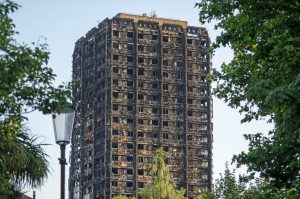
On 17 May, Dame Judith Hackitt published her final report in the Independent Review of Building Regulations and Fire Safety, which was commissioned by the government following the Grenfell Tower fire. The report concluded that the current regulatory system for ensuring fire safety in high-rise and complex buildings was not fit for purpose, and that a radical rethink of the whole system was needed. It set out over 50 recommendations for the government, including a new regulator to oversee the construction and management of buildings, but (controversially) did not call for a ban on flammable cladding. See News Analysis: The Hackitt fire safety report—does it go far enough?
The same day as the report was published, the government announced that it would consult on a possible ban on flammable cladding (see: LNB News 17/05/2018 84), which commenced on 18 June and runs until 14 August 2018 (see: LNB News 19/06/2018 96). The government also ran a consultation on the use of desktop studies for fire safety purposes from 11 April to 25 May (see: LNB News 11/04/2018 95), following criticisms made of such studies in Dame Hackitt’s interim report. The outcome of this consultation is awaited.
The Independent Review and Building Regulations and Fire Safety is separate to the Grenfell Tower Inquiry, which commenced on 14 September 2017 and is currently hearing evidence.
According to Peter Aldous MP, the sponsor of the Construction (Retention Deposit Schemes) Bill, Carillion’s insolvency highlighted the need for such legislation due to the possibility of parties lower down the supply chain losing retentions paid out to Carillion.
CIC BIM Protocol
Lastly, on 10 April, the Construction Industry Council (CIC) published the second edition of its Building Information Modelling (BIM) Protocol, to reflect significant progress with standards and practices in relation to BIM since the first edition was published in 2013. See News Analysis: The new CIC BIM Protocol—what’s changed?
Shortly after, the NEC published guidance on how to use the protocol with the NEC4 Engineering and Construction Contract (see: LNB News 16/04/2018 48).
The above links require a subscription to LexisPSL Construction. Click here for a free trial.
Environmental amendments to European Union (Withdrawal) Act 2018, House of Commons Environmental Audit Committee report on mandatory climate risk reporting, the future of environmental law
Welcome to our environmental law news podcast produced in partnership with Christopher Badger, Barrister, 6 Pump Court.
In this podcast, we consider some of the key legal developments in environmental law during June 2018, including:
The environmental amendments made to the European Union (Withdrawal) Act 2018 at bill stage during ping pong
The House of Commons Environmental Audit Committee report on mandatory climate risk reporting
The future of environmental law, as discussed at the United Kingdom Environmental Law Association annual conference over the 22 -23 June, 2018
To listen to the podcast, press play below or to download and perhaps listen on the go, click here.
Environmental amendments to European Union (Withdrawal) Act 2018 – listen from 0.28 secs
Christopher takes us through some of the critical environmental amendments that were made to the European Union (Withdrawal) Act 2018, prior to it receiving Royal Asset on 26 June 2018. These are the amendments dealing with how environmental principles and standards will be protected after the UK leaves the European Union.
House of Commons Environmental Audit Committee report on mandatory climate risk reporting – listen from 4.08 secs
On 4 June 2018, the House of Commons Environmental Audit Committee published its Seventh Report of Session 2017-19, ‘Greening Finance: embedding sustainability in financial decision making’.
Christopher discusses the report’s key proposals, which aim to engage the UK investment chain with the impact that climate change and other environmental problems pose to the economy.
The future of environmental law – listen from 7.10 mins
On the 22-23 June 2018, the United Kingdom Environmental Law Association held its annual conference at the University of Kent, Canterbury, under the title ‘Past Reflections and Future Horizons: Environmental law in a post-Brexit World’.
A number of significant issues were discussed that are likely to heavily influence the development of environmental law over the coming years and Christopher takes a moment in this podcast to consider these.
In ICI v Merit Merrell[2018] EWHC 1577 (TCC), Fraser J in the Technology and Construction Court warned against the use of biased expert evidence and reminded experts and legal advisers of important points to bear in mind in this regard:
There are some jurisdictions where partisan expert evidence is the norm. For the avoidance of any doubt, this jurisdiction is not one of them.
The judgment
Following an earlier judgment determining that an employer had been in repudiatory breach of contract, the court considered issues around quantum. In doing so, the court found that it was not bound by the Project Manager’s assessments of compensation events (under the NEC3 contract), that the burden of proof was on the employer to show that the contractor had been overpaid, and that the contractor was entitled to recover losses caused by the negative impact which the breach had had on its financial position.
In parts of the (lengthy) judgment, the court was critical of some of the expert evidence. For example, it noted that one of the experts had:
valued work at actual cost rather than using the agreed rates, despite there being no contractual basis for this
opined on causation, which was a matter for the court
not taken account of specific findings made in the liability judgment
In fact, Fraser J was generally concerned by the preponderance of partisan experts called by one of the parties, and stressed the need for experts and instructing legal advisers to take careful note of the principles governing expert evidence.
Points to bear in mind
In addition to reminding experts to read CPR PD 35, the court noted six points about an expert’s duties which should be borne in mind (para 236):
1. Experts of like discipline should have access to the same material. No party should provide its own independent expert with material which is not made available to his or her opposite number.
2. Where there is an issue, or are issues, of fact which are relevant to the opinion of an independent expert on any particular matter upon which they will be giving their opinion, it is not the place of an independent expert to identify which version of the facts they prefer. That is a matter for the court.
3. Experts should not take a partisan stance on interlocutory applications to the court by a particular party (almost invariably the party who has instructed them). This is not to say that a party cannot apply for disclosure of documents which its expert has said he or she requires. However, the CPR provides a comprehensive code and it may be that disclosure is not ordered for reasons of disproportionality. However, if documents are considered to be necessary, and they are not available (for whatever reason), then an opinion in a report can be qualified to that extent.
4. The process of experts meeting under CPR Part 35.12, discussing the case and producing an agreement (where possible) is an important one. It is meant to be a constructive and co-operative process. It is governed by the CPR, which means that the Overriding Objective should be considered to apply. This requires the parties (and their experts) to save expense and deal with the case in a proportionate way.
5. Where late material emerges close to a trial, and if any expert considers that is going to lead to further analysis, consideration or testing, notice of this should be given to that expert’s opposite number as soon as possible. Save in exceptional circumstances where it is unavoidable, no expert should produce a further report actually during a trial that takes the opposing party completely by surprise.
6. No expert should allow the necessary adherence to the principles in The Ikarian Reefer* to be loosened.
*The Ikarian Reefer is a 1993 decision which summarises the principles concerning expert evidence, including that expert evidence should be independent and that an expert should never take on the role of an advocate.
David Savage, partner and head of the construction and infrastructure team at Charles Russell Speechlys, examines the final report of the Independent Review of Building Regulations and Fire Safety. Controversially, while recommending a complete overhaul of the current building system for residential tower blocks, the report did not recommend a ban on flammable cladding.
First published on LexisPSL Construction. Click here for a free trial.
What is the purpose of the report?
The report was commissioned by the government with the remit to conduct an independent, in-depth review into building regulations and fire safety, in the wake of the Grenfell fire tragedy in which 72 people died in the greatest loss of life in a fire in a century.
The review focusses on regulations which currently apply to high-rise buildings, and identifies key areas for change. The report’s interim findings were reported in December 2017 (see News Analysis: Interim report on building regulations and fire safety published) and the final report was published on 17 May 2018.
What key issues are identified in the report?
Dame Judith Hackitt’s report identifies ignorance, indifference, lack of clarity on roles and responsibilities, inadequate regulatory oversight, and inadequate enforcement tools as the key culprits for the system’s failures.
The report states that the bar for compliance with building safety requirements is too low, with weak processes, poor record-keeping and change control in many cases. It notes that levels of competence are inconsistent, and that current ‘Approved Documents’ can be ambiguous and inconsistent. Finally, it also identifies the product testing, labelling and marketing regimes as a key issue, with current practices being insufficient, and finds that the voices of residents often go unheard, even where safety issues are concerned.
Dame Hackitt recommends moving away from dictating requirements to responsible duty holders. Her report looks to place those responsible in a position to take ownership and make intelligent decisions about the layers of protection required to keep high-rise residential tower blocks safe.
What key recommendations are made?
The report recommends a complete overhaul of the current system for residential tower blocks. Dame Hackitt recommends that government set up a ‘joint competent authority’ (JCA), comprising local authority building standards, fire rescue authorities and the Health and Safety Executive. A system of mandatory occurrence reporting to the JCA should then be put in place. Non-reporting should be regarded as non-compliance and sanctioned appropriately.
The new framework would include a new, independent body (essentially, a rebranded local authority Building Control) which would approve building safety at design stage and at regular intervals thereafter, and which would have the power to levy hefty fines, issue ‘stop’ notices and even impose prison sentences for non-compliance. Limitation periods for prosecution would be extended. The report also recommends that any private building inspectors used should be independent of builders.
The new regime that Dame Hackitt proposes would only apply to buildings of ten storeys or more. This means current requirements for buildings between six and nine storeys would remain in place, with the changes proposed being relevant only for buildings of ten storeys and above. New buildings should be identified by the local planning authority (LPA) and notified to the regulator, while existing buildings in scope should be identified through other means.
The report also recommends that the new framework treat buildings as a single entity and proposes the publication of a new, ‘over-arching approved document’ which would describe the system as a whole.
Other key recommendations made include:
that the government identifies the key roles that will be most important in initiating, overseeing or influencing activity throughout the procurement, design and construction phase to ensure increased accountability, and
where a planning application is made for a high-risk building, the LPA should be required by law to undertake a consultation with the JCA. The same process should apply where planning is sought for another building in the near vicinity (where such building might impact fire service access)
Does the report go far enough?
The review provides a powerful critique of the current regulatory framework and practices within the English construction industry. It identifies key issues with the current system and industry culture, and calls for systematic change and a new regulatory body.
Yet, in many instances, Dame Hackitt has stopped just short of expressly condemning practices which many consider are at the root of the industry’s problems. Notably, the report fails to specifically condemn practices or call for urgent action in respect of combustible materials, desktop studies and materials testing, which many consider essential measures to improving safety.
Despite widespread calls for a ban on combustible materials in cladding systems, the report does not call for this. Dame Hackitt justifies this by stating that a ‘totally prescriptive system’ would create over-reliance on the system and discourage ownership and accountability. She did however indicate that, should the government proceed with a complete ban, she would support this.
Her failure to come down firmly on this matter, alongside other issues, has tainted the report’s reception. The government has now responded by announcing a consultation on the subject of combustibles (see: LNB News 17/05/2018 84), which many find encouraging, but which raises the question—why not recommend a complete ban in the first place? When questioned about exactly this point, Dame Hackitt explained her position as follows:
If people feel that I have not gone far enough, and that for this system to work in the future requires, in addition, that there is further clarity or indeed banning of some of the materials that are being used, I don’t have a problem with that.
What I would be very disappointed about, however, is if people think that simply banning cladding is going to fix this problem—it won’t. It is a broken system and banning cladding on its own will not fix it. If we change the system and implement the new regulatory framework, and take further steps on what cladding is or is not allowed, I don’t have a problem with that at all.
The report does not call for additional oversight to the large-scale cladding testing regime. While it calls for annual reports on tests carried out, it does not suggest that these should be made public. It therefore stops short of a ban which would prevent ‘desktop studies’ from being carried out, but recommends instead that these studies should only be carried out by organisations who are accredited to do so.
The report also stops short of recommending a ban on product substitution, recommending instead a ‘significantly reduced scope for substitution of any products used in a system without further full testing’.
Finally, despite criticism of the current system in place, Dame Hackitt also does not recommend changes to the practice of carrying out ‘category one’ fire risk assessments. Her view is that professional bodies, not government, should decide what a ‘competent person’ is for the purposes of these assessments—although she stops short of recommending compulsory certification.
What do you expect will happen next?
Interested parties seem encouraged by the announcement of the combustibles consultation, though many are frustrated that the report has not included outright condemnation in respect of many of the practices listed above. There are concerns that without the implementation of a ban, further decisive action will fail to follow and the report will be relegated to a pile of previous recommendations without ever effecting serious change in the industry.
It has also been suggested that some of the report’s proposals underestimate the complexity of the task ahead, which would affect the likelihood of their implementation, and Dame Hackitt has provided no clear guidance on how long it would take to bring in this new system.
However, within 24 hours of the report’s publication, James Brokenshire MP, Secretary of State for Housing, Communities and Local Government:
committed to bringing forward legislation that delivers ‘meaningful and lasting change, and ensures that residents have a much stronger voice in an improved system of fire safety’
made clear that his Department was consulting on significantly restricting or banning the use of ‘desktop studies’ to assess cladding systems, and confirmed his view that inappropriate use of desktop studies was unacceptable
indicated that he would not hesitate to ban the use of desktop studies if his Department’s consultation—which closed on 25 May 2018—did not demonstrate that they could be used safely
confirmed he was working with industry to clarify building regulations fire safety guidance, and would be publishing proposals in this regards for consultation in July 2018
DEFRA launches environment watchdog consultation, Public Accounts Committee’s damning assessment of DEFRA’s Brexit preparations, EU infringement proceedings for air quality
Welcome to our monthly environmental law newscast produced in partnership with Christopher Badger, Barrister, 6 Pump Court.
In this bulletin, we consider some of the key legal developments in the environmental law field in May 2018, including:
DEFRA launches environment watchdog consultation;
Public Account Committee’s damning assessment of DEFRA’s Brexit preparations; and
EU infringement proceedings for air quality
To listen to the audio file, press play below or to download as audio only, click here.
DEFRA launches environment watchdog consultation – tune in from 0.33 secs
DEFRA has launched a 12-week consultation in which it states that a new Environmental Principles and Governance Bill will create a ‘new, world-leading, independent environmental watchdog to hold government to account on the UK’s environmental ambitions and obligations’ once the UK has left the EU.
Christopher takes us through some of the key issues raised in the consultation and highlights some of the criticisms these proposals are facing.
Public Account Committee’s damning assessment of DEFRA’s Brexit preparations – tune in from 3.07 mins
On 4 May, the House of Commons Public Accounts Committee published a report roundly criticising DEFRA’s preparations for Brexit. The Committee took evidence in preparing its report on 7 March 2018.
In this Newscast, Christopher summarises the findings of the report, outlining its stark recommendations and conclusions, which highlight just how much more work DEFRA must do to prepare for Brexit.
EU infringement proceedings for air quality – tune in from 6.12 mins
On 17 May, the European Commission confirmed that it has referred the UK, together with France and Germany, to the European Court of Justice for failure to respect limit values for nitrogen dioxide and for failing to take appropriate measures to keep exceedance periods as short as possible.
Christopher discusses these infringement proceedings in the context of the new Clean Air Strategy, published on 22 May.
If you are a Client and we have made a contract with you by electronic means you may be entitled to use an EU online dispute resolution service to assist with any contractual dispute you may have with us.
This service can be found at ec.europa/consumers/odr
Our email address is glg@hardwicklegal.com.
Hardwick Legal Solicitors website uses cookies so that we can provide you with the best user experience possible. Cookie information is stored in your browser and performs functions such as recognising you when you return to our website and helping our team to understand which sections of the website you find most interesting and useful.
Strictly Necessary Cookies
Strictly Necessary Cookie should be enabled at all times so that we can save your preferences for cookie settings.
If you disable this cookie, we will not be able to save your preferences. This means that every time you visit this website you will need to enable or disable cookies again.

 We look back at some of the key developments that occurred in the world of construction law and practice in the first half of 2018, highlighting important cases, legislation and other industry developments.