by Hardwick Legal | Oct 27, 2015 | Purpose Built (LexisNexis)

Image credit: Steve Partridge
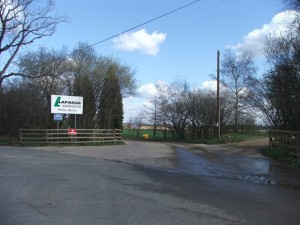
In R (on the application of Lafarge Aggregates Limited) v Secretary of State for Environment, Food and Rural Affairs, [2015] EWHC 2388 (Admin), the High Court dismissed a judicial review application of a decision to uphold a refusal of Lafarge’s application for a standard rules environmental permit for the restoration of a quarry using inert waste.
In considering whether the proposed operations were ‘waste recovery’ operations, the court held that Lafarge had not shown that if waste could not be used for the proposed operations, they would otherwise have taken place using non-waste materials.
Background
Lafarge, a building materials supplier, had applied for planning permission to extract sand and gravel from the Methley Quarry in Leeds. The planning conditions included the restoration of a public footpath which had originally crossed the site. As Lafarge proposed to use recovered waste materials to reinstate the footpath, it applied to the Environment Agency (EA) for an environmental permit. This application and the subsequent appeal to an inspector from the Department for Environment, Food and Rural Affairs (Defra) against the decision were refused. Lafarge argued that the inspector had been wrong in his interpretation of art 3(15) of the revised Waste Framework Directive 2008/98/EC (rWFD).
Judicial review application dismissed
The key issue was whether the proposed operations were ‘waste recovery’ operations under art 3(15) of the rWFD, and therefore fell within the criteria for a standard rules permit, or whether they involved ‘waste disposal’ operations, and therefore required a bespoke environmental permit.
The High Court held that Lafarge’s proposed operations did not clearly fall within one of the recovery operations listed in the non-exhaustive list of recovery operations in Annex II to the rWFD. As a result, it was necessary to ascertain whether the proposed operations otherwise fell within art 3(15).
This hinged on the concept of ‘useful purpose’ contained in art 3(15). The crucial question to ask was whether the waste served a useful purpose in replacing other materials, which would have been used for that purpose. This approach had been established by the European Court in Abfall Service AG (ASA) v Bundesminister für Umwelt, Jugend und Familie: Case C-6/00 [2992] ECR I-01961.
The planning condition requiring footpath restoration was relevant but not conclusive in ascertaining whether the waste served a useful purpose. It was still possible for the conditions to be varied under the Town and Country Planning Act 1990. The inspector had been entitled to take alternative approaches in fulfilling the local planning authority’s aims for restoration of the site into account in his decision letter. It was further open for him to have concluded, on the balance of probabilities, that non-waste materials would not be used in the circumstances and so waste materials were not required to substitute those non-waste materials that would otherwise have been used. Larfarge’s arguments were therefore related to matters of weight, not the lawfulness of the inspector’s decision.
Additionally, the court held that the burden of proof was on a claimant to demonstrate that its proposed operation was a ‘waste recovery’ operation and met those relevant tests.
Implications of the decision for other projects/developments
This case illustrates the complexity of dealing with waste and determining whether an activity is a waste recovery or waste disposal operation.
As in all judicial review cases, the court will not intervene in the merits of the decision, but only whether the evaluative process behind the decision was exercised correctly. Practitioners who carry out such assessments should particularly note the judge’s support for the inspector’s ‘adequately reasoned decision letter’. This had clearly demonstrated his understanding of the relevant planning background, his assessment of Lafarge’s application using the EA’s Regulatory Guidance Note 13 on the Environmental Permitting Regulations, and his regard to commercial realities. A decision with clear and sound reasoning may be less vulnerable to challenge than one with less substantiated conclusions.
However, the Lafarge case cannot be disposed of just yet. Arguments for permission to appeal to the Court of Appeal commenced in mid-October. Time will tell if there are further lessons to be unearthed.
Source: LexisNexis Purpose Built
Waste operations: Recovery vs Disposal – the Lafarge judicial review
by Hardwick Legal | Oct 26, 2015 | Purpose Built (LexisNexis)
A referendum on whether the UK should remain a member of the EU is scheduled to take place by the end of 2017. Jonathan Lewis, head of real estate at Olswang and Richard James, partner at Pannone Corporate, looks at the possible impact of the referendum on property lawyers and their clients.
How could your practice area be affected by the EU referendum?
Jonathan Lewis (JL): The importance of the EU to the commercial real estate investment market is primarily twofold.
The first relates to capital flows both to and from the rest of Europe. If the outcome was to withdraw from the EU there is likely to be less cross border investment which would adversely affect the market.
The second relates to the macroeconomic sentiment. If withdrawal is perceived as likely to slow growth of the UK economy this will mean investors become more cautious and occupiers become more cautious in committing to leasing more space.
Richard James (RJ): The political uncertainty surrounding the EU referendum, due to take place before the end of 2017, threatens the stability of the commercial property market in the UK, but the threat may well be temporary and part balanced by other factors.
The property sector experienced strong capital growth throughout 2014 and the first quarter of 2015 which has continued, albeit at a slower rate, for the second and third quarters of 2015. Economic projections do not presently show the pending referendum as a factor affecting investment in the UK for 2015. However, the effect of this perceived increased risk and uncertainty may be more apparent in investment over the next two years.
Particularly in the occupier market, overseas firms looking to establish access to the European market may choose to position their facilities in countries with guaranteed member status as opposed to the UK. Similarly, expansion within the UK from overseas investors may be delayed pending the outcome of the referendum. However, recently Nissan appeared to dismiss this consideration, investing a further £37m in the northeast to expand their operations.
What would a vote to leave the EU mean in practice for the property sector?
RJ: Following a decision to leave the EU, there may be an initial detrimental impact on demand and a potential to slow the current growth of commercial property sector. However, this is likely to be temporary during the transitional period after the referendum, while an assessment is made by investors as to the overall economic impact.
With an ever increasing demand from overseas investors, supply may be a more compelling issue affecting the UK property market than the uncertainty surrounding the forthcoming EU referendum.
The demand for property in the UK continues to outweigh the supply. The comparatively high returns, access to financial and European markets in the UK means that longer-term investment is being made in the UK commercial property sector—ultimately impeding the supply—with the potential to hamper future investment.
The current lack of supply is increasingly being met by speculative development in regional centres. Such investments may suffer as a result of the perceived risk of the referendum, due to restrictions developers may face from institutional and other lenders during such times of uncertainty.
There is also the potential for the demand to ease. Membership of the EU has been cited as an important factor attracting and incentivising both local and overseas investors to the UK market which currently offers unrestrained access to the EU market.
In practice, both local and investors from outside the EU view commercial property in the UK as a good investment, being a country with a reasonably stable economy in which such an investment is relatively lightly regulated, compared to other areas in Europe. These factors will continue to facilitate movement in the market. However, the transitional period may see a reduction in the number of clients looking to undertake developments and longer-term investments, in favour of short-term investments with high yield offerings.
Practically, the repercussions of a decision to leave the EU may make lenders more cautious in the short term meaning investors would potentially struggle to obtain funding for more speculative development opportunities. Funding generally may be subject to prohibitively high premiums or the client’s themselves may be more reluctant to invest in a transitioning market place.
What would a vote to leave the EU mean in practice for lawyers in your field?
JL: In terms of property lawyers, the reality is that whether or not we are in the EU will make little difference on a day to day basis due to the fact that we already have our own very distinct legal system.
Of course, the role of the EU in setting Europe wide legislation and regulations does affect real estate lawyers, but I wouldn’t bank on the government having fewer rules and regulations if we came out of Europe.
What are your key concerns about a future EU referendum?
JL: The impact of regulations from Europe in relation to matters such as the environment is important, but many of these are considered of importance to the UK government so I don’t envisage radical change.
The free movement of people within Europe has meant that there are massive resources in terms of human capital available to the booming construction industry. If free movement was restricted in some way there would be a significant increase in construction costs due to the shortage of construction workers.
Interviewed by Nicola Laver.
The views expressed by our Legal Analysis interviewees are not necessarily those of the proprietor.
Source: LexisNexis Purpose Built
Leave or remain? What the EU referendum means for property lawyers
by Hardwick Legal | Oct 19, 2015 | Purpose Built (LexisNexis)
The government has recently confirmed that certain permitted development rights (PDRs) enabling offices to be converted into new homes - originally intended to be a temporary measure - will now be made permanent, with further PDRs to follow.
This will be a welcome announcement for developers who no longer need to complete such conversions by May 2016, but may result in additional work - without fees - for local planning authorities (LPAs).
What changes have been announced?
Housing and Planning Minister Brandon Lewis has announced new measures that will make it easier to turn underused office buildings into new homes, namely:
- to make permanent, temporary permitted development rights to enable offices to be converted to new homes without having to apply for planning permission. The temporary rights were introduced in May 2013 and were set to expire on 30 May 2016
- those who already have permission to convert offices into residential will have three years in which to complete the change of use
- in future, to allow the demolition of office buildings and new building for residential use, subject to limitations and prior approval by the LPA
- to introduce new permitted development rights to enable the change of use of light industrial buildings and launderettes to new homes, subject to prior approval by the LPA
Why are the changes being made?
The government’s key aims are to boost house-building, make the best use of existing buildings, including some that are underused and neglected, and protect the green belt.
What does this mean for developers?
Increased certainty
Under the temporary right, developers who failed to complete any unfinished conversions and get them occupied by May 2016 would have been in breach of the conditions attached to it, leaving them at risk of enforcement. Developers will undoubtedly welcome the change in status of the PDR from temporary to permanent.
Obtaining “prior approval” for qualifying developments
Developers will still need to apply for “prior approval” from the LPA, to confirm that specified elements of any qualifying development are acceptable before work can proceed.
The process is essentially comprised of:
- submitting information to the LPA;
- the notification of consultees, followed by a consultation period; and
- consideration of any objections (if objections are raised, this can of course delay the approval).
Nevertheless, the statutory requirements relating to prior approval are still much less prescriptive than those relating to planning applications.
What are the implications for LPAs?
Planning departments have to prioritise applications for prior approval, even though they do not receive a fee for them. This is because if the application is not considered within six weeks, it is deemed to have been approved.
Under the rules for the householder extension permitted development right, LPAs must notify neighbours of applications for prior approval. Where objections are made, LPAs must decide whether the impact on the amenity of all adjoining properties is acceptable.
There are areas in 17 LPAs in England that are currently exempt from the rights, mainly in London. These exemptions will remain in place until May 2019, providing time for the LPAs to consider making an Article 4 direction to remove the rights and require a planning application for any proposed change of use.
What are the potential disadvantages of the permanent rights?
The government was initially reluctant to extend the permitted developments rights .
In an explanatory note, it stated that the consultation revealed concern on the future availability of business premises, the impact on surrounding businesses and the quality of the new dwellings.
However, it appears that ultimately, the political drive to boost housing numbers outweighed these concerns.
Source: LexisNexis Purpose Built
It’s “office”ial! Office to resi permitted development rights here to stay
by Hardwick Legal | Oct 6, 2015 | Purpose Built (LexisNexis)
To receive next month’s edition by email please register your details using the form on this page
Welcome to this month’s update by Lexis®PSL Property!
In this month’s edition, we look at seven cases to find the answers to these questions:
Who owns a Banksy mural on the wall of a commercially tenanted property?
What is the relationship between contractual obligations to use “all reasonable endeavours” to obtain planning permission and clauses setting out specific parameters for certain actions to be taken as part of that process?
Does bad/incomplete advice alone constitute professional negligence? What else must a claimant show?
Can time be of the essence where the date for performance/completion is not fixed by the contract?
What is the effect on the freeholder of a property where a (third party) landlord has purported to create a lease over that property without sufficient interest to do so?
How should mixed use buildings be treated for insurance purposes when seeking contributions to the premium from tenants of purely residential areas?
Is service charge certification is simply part of the service charge machinery or a condition precedent to payment?
Find all of the answers in this month’s highlights!
Written transcript:
Download the September transcript here
Video (with supporting slides, mp4):
To receive next month’s edition by email please register your details using the form on this page –>
Source: LexisNexis Purpose Built
September 2015 Lexis®PSL Property Highlights

by Hardwick Legal | Oct 2, 2015 | Purpose Built (LexisNexis)

“The Lorax: Which way does a tree fall?
The Once-ler: Uh, down?
The Lorax: A tree falls the way it leans. Be careful which way you lean.”
The Ministry of Justice (MoJ) recently launched its consultation on reforms to the costs-capping rules in environmental challenges. In this post we consider the changes being put forward and what they may mean for the future of environmental litigation.
What prompted these reforms?
Three main factors appear to have sparked the touchpaper for this latest round of reforms.
- According to the consultation paper, there remains scope for greater clarity and certainty following both domestic and European judgments[1] that the pre-2013 environmental costs regime failed to satisfy the ‘not prohibitively expensive’ requirement of the Public Participation Directive or the Aarhus Convention.
- There have been continued Government efforts to tackle the ‘growth in unmeritorious judicial review’, most recently in funding.
- The headlines of the delayed implementation of several major infrastructure projects arising from legal challenges with HS2, London Garden Bridge, and Hinkley Point C nuclear power station to name but a few.
What is being proposed?
The proposals fall into four main areas:
- the scope of the regime in terms of the types of cases that are eligible for costs protection and whether the regime should be extended to apply to certain reviews under statute;
- the types of claimant eligible for costs protection;
- the levels of costs protection available and whether they should remain fixed or should be variable; and
- the factors which courts consider when deciding whether cross-undertakings in damages for interim injunctions are required in cases which fall within the scope of the regime.
Scope
‘Aarhus Convention claims’ (judicial review claims made under the Aarhus Convention’s provisions) are eligible under Civil Procedure Rules (CPR) 45.41(2) for the Environmental Costs Protection Regime (ECPR).
The proposals suggest amending Practice Direction (PD) 52D to include specific statutory reviews in Aarhus Convention claims. This means appeals against enforcement decisions relating to unauthorised development under sections 289(1) and (2) Town Country Planning Act and section 65(1) of the Planning (Listed Buildings Conservation Areas) Act 1990 would be eligible for the ECPR, dependent on their subject matter.
Claimants
The proposals suggest amending CPR 45.43 so that only a claimant who is a ‘member of the public’ can be entitled to costs protection. This would exclude proceedings brought by public authorities from the scope of the ECPR. In addition, the proposals float the idea that costs protection should only be granted once permission to apply for judicial or statutory review (where relevant) has been given.
Levels of costs protection
This is where the most significant changes are proposed. Among them are:
- A requirement for claimants to file and serve a schedule of their financial resources with their claim form, which includes details of any financial support from others;
- Increasing the current caps for individual claimants and other claimants respectively to £10,000 and £20,000;
- Reducing the cap for defendants to £25,000;
- A separate costs cap for each individual party in cases with multiple claimants or defendants;
- Giving courts the power to vary or remove any caps in appropriate cases (so long as any variation is in line with the Edwards principles, and not make the costs ‘prohibitively expensive’); and
- Changing the assessment of costs for defendants who challenge a claimant’s ECPR eligibility from indemnity to standard basis.
Factors for cross-undertakings in damages
Three amendments are proposed to PD25A. These are:
- for courts to apply the Edwards principles, when considering if continuing with proceedings would be ‘prohibitively expensive’;
- to take into account the combined financial resources of claimants in a multi-claimant case;
- and to clarify that the provisions relating to cross-undertakings in damages in Aarhus Convention claims apply only to an applicant for an interim injunction who is a member of the public.
Comments
In Dr Seuss’ children’s tale, the titular ‘Lorax’ who ‘speaks for the trees’ warns the Once-ler of the environmental consequences that a preoccupation with industry and economic growth may lead to.
Although the changes extend the scope of ECPR beyond judicial reviews, other potential restrictions on claimants are worrying. There is substantially increased financial scrutiny and burden on claimants. The paper expressly acknowledges that this could deter claimants from bringing a claim. Environmental activist groups have already expressed concerns which have not gone unnoticed by the Aarhus Clearinghouse newsroom.
The Government’s proposed ‘measured adjustments’ to the ECPR are unsurprising, in light of other policy developments and goals. The changes are intended to disincentivize ‘unmeritorious challenges to cause delay’ and so equalise the ‘uneven playing field’ for defendants.
This overlooks the fact that, in environmental litigation, there is often an imbalance of resources between claimants (typically members of the public or campaign groups) and defendants (typically a development company or government agency) from the outset. The proposals do little to quell this disparity and instead create real disincentives against members of the public pursuing Aarhus claims. If the reforms go through as currently drafted, there may be fewer voices willing or able to speak for the trees.
[1] Edwards v. Environment Agency (case C-260/11 [2013] and subsequent [2013] UKSC 78) and European Commission v. United Kingdom (case C-530/11; [2014] 3 WLR 853)
Source: LexisNexis Purpose Built
“Who will speak for the trees?” — MoJ “Costs Protection in Environmental Claims” consultation